All artwork by Rabbi Robyn - Please only reproduce the work on this blog with proper attribution or the permission of the author. (First two prints = Lino print, 3rd/4th prints = mono printing). With thanks to the Manchester Chavurah.

Number 8 of my series of Tattoo Worthy Texts. Here we start with the words of the prophet Jeremiah and move into a radical and necessary re-reading and re-celebration of the Purim story as we ask the all powerful question, what if?! Can we try and save Mordechai and Esther from the seduction of the palace?
אַל־תִּבְטְח֣וּ לָכֶ֔ם אֶל־דִּבְרֵ֥י הַשֶּׁ֖קֶר לֵאמֹ֑ר הֵיכַ֤ל יְהֹוָה֙ הֵיכַ֣ל יְהֹוָ֔ה הֵיכַ֥ל יְהֹוָ֖ה הֵֽמָּה׃
Don’t put your trust in deceptive words and say, “The Temple of Adonai, the Temple of Adonai, the Temple of Adonai are these [buildings].”
Jeremiah 7:4
I love this quote from Jeremiah which I understand as saying, quite simply, ‘do not trust institutions’. Stop believing that buildings and organisations are the solution or the end point. My teacher, Rabbi Sheila Shulman (z”l), warned me during my student rabbis days - ‘do not become a square’ when I told her I had got my first community rabbinic job. Like those to whom Jeremiah preached, I did not understand Rabbi Sheila’s warning at the time, but oy, do I now!
Jeremiah (and Rabbi Sheila) warn - do not forget the institution is not holy in and of itself. Hold onto what religious institutions serve - divinity and holiness. Do not forget that nature demands that we continue to evolve through our symbiotic relationships with each other. When religious institutions demand conformity, silence, and seek to retain the status quo they can no longer evolve and are stuck, and dangerous. Once we lose sight of our purpose and our grounding values and worship the institution separated from divinity, we lose ourselves. This is the verse I would have tattooed - as a warning to me not to be seduced by all that institutions falsely offer.
Following a very joyous and moving Megillah reading with my chavurah (which attempts to be an anti-institutional gathering), I want to share with you a reading we constructed about Megillat Esther (the scroll of Esther).
Esther enters an institution which is literally drunk on power, constructed on providing honour to those in power at any cost, predicated on the suffering of others, and full of deception (outlined by Jeremiah) which prefers appearance over depth. (Just have a look for how many times the words ‘cosmetics’, ‘wine’, ‘banquets’ are repeated!!) It is all a show - quite literally.
The power of reading the scroll in a community is you get to hear from each other and their interpretations can break open the text. One person in the chavurah said they thought the role of Mordechai was to keep coming from the outside of the institution to remind Esther of the world outside whilst she became, quite literally, dressed by and perfumed by the palace. Mordechai knows the risk Esther is under (let’s not focus, for now, on his role in putting Esther in this precarious situation…) and he’s there to enact Jeremiah’s words - do not believe the lies the institution, the palace tells you - remind who you are and what matters.
Yet, as the tale unfolds, both Mordechai and Esther become utterly lost to the palace. In the chavurah reading one person drew our attention to how many garments Mordechai donned in the story. He begins, presumably, in normal clothes. At the beginning of chapter 4 he puts on mourning garments (sackcloth and ashes), refusing to change even when Esther sends new clothes. So far he remembers who he is and what his tradition demands and will not succumb to the promises of the palace. He can still grieve and understand the destructive power of a palace decree.
But then, in chapter 6, there is a point of no return when the king instructs Haman to dress Mordechai. Unlike earlier when he refuses Esther’s clothes from the palace, Mordechai succumbs. He is now passively dressed, by Haman (the symbol of the worst of the palace) in royal garb with a royal diadem on his head. By chapter 8:15 we read that ‘Mordecai left the king’s presence in royal robes of blue and white, with a magnificent crown of gold and a mantle of fine linen and purple wool’. Quite a departure from the sackcloth and ashes.
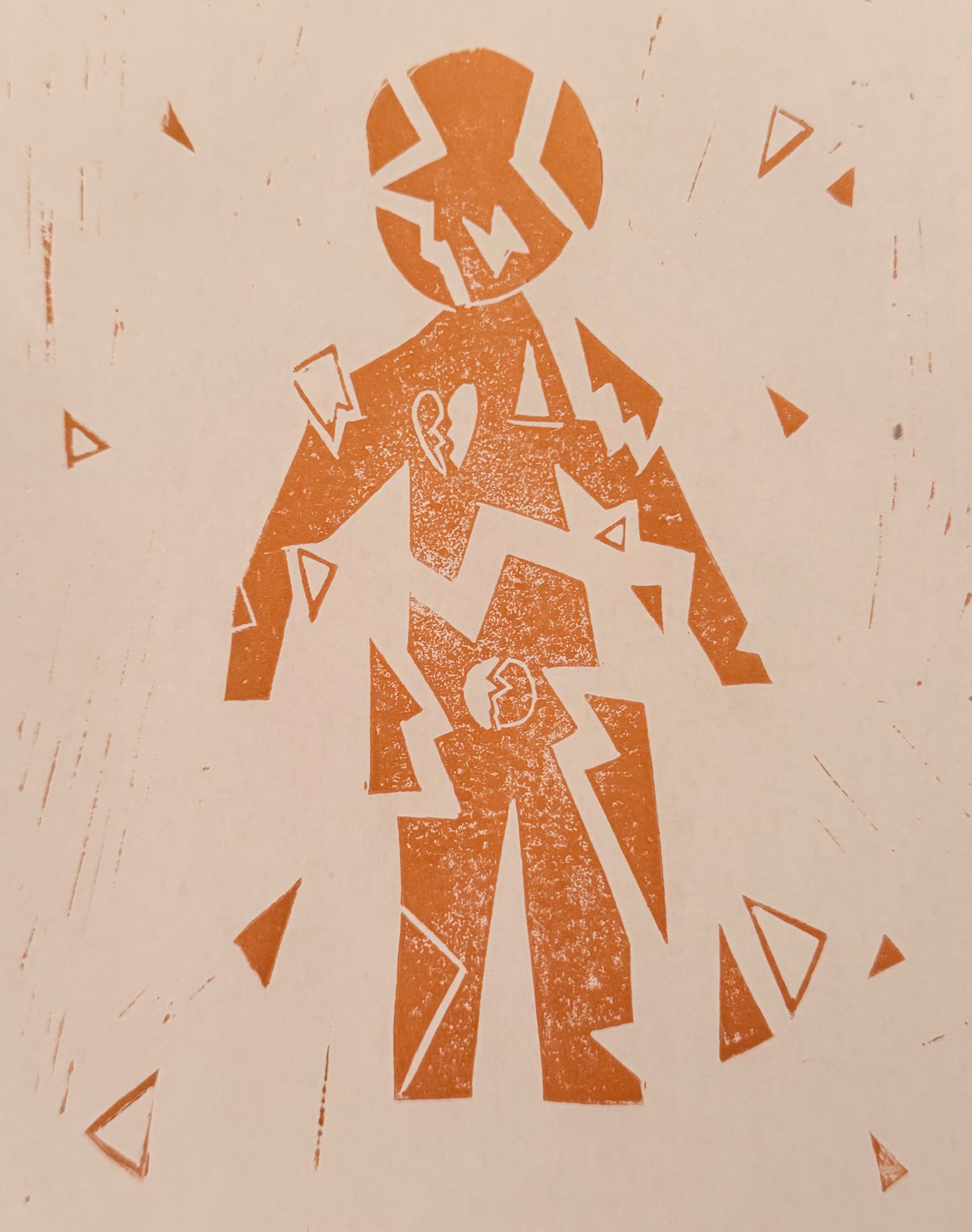
Mordechai is now unrecognisable and has become, fully, a tool of the palace, and just four verses before we read that under his dictation the following edict is written, ‘The king has permitted the Jews of every city to assemble and fight for their lives; if any people or province attacks them, they may destroy, massacre, and exterminate its armed force together with women and children, and plunder their possessions…’ How far Mordechai has fallen from the champion of the Jews, tearing his clothes when he hears of edicts of violence and destruction, to issuing them himself. 9:4 reads - ‘For Mordecai was now powerful in the royal palace, and his fame was spreading through all the provinces; this man Mordecai was growing ever more powerful.’ Esther too becomes unrecognisable (and increasingly invisible and lost) to us as we hear at 9:13 that she asks that the killing continue. There is no one to remind Esther or Mordechai of the outside world. They are alone with the deceptive words of the palace.
As our chavurah read the Megillah and we started to see Mordechai’s fall, someone, amidst the boos and the cheers, said ‘oh no Mordechai’.
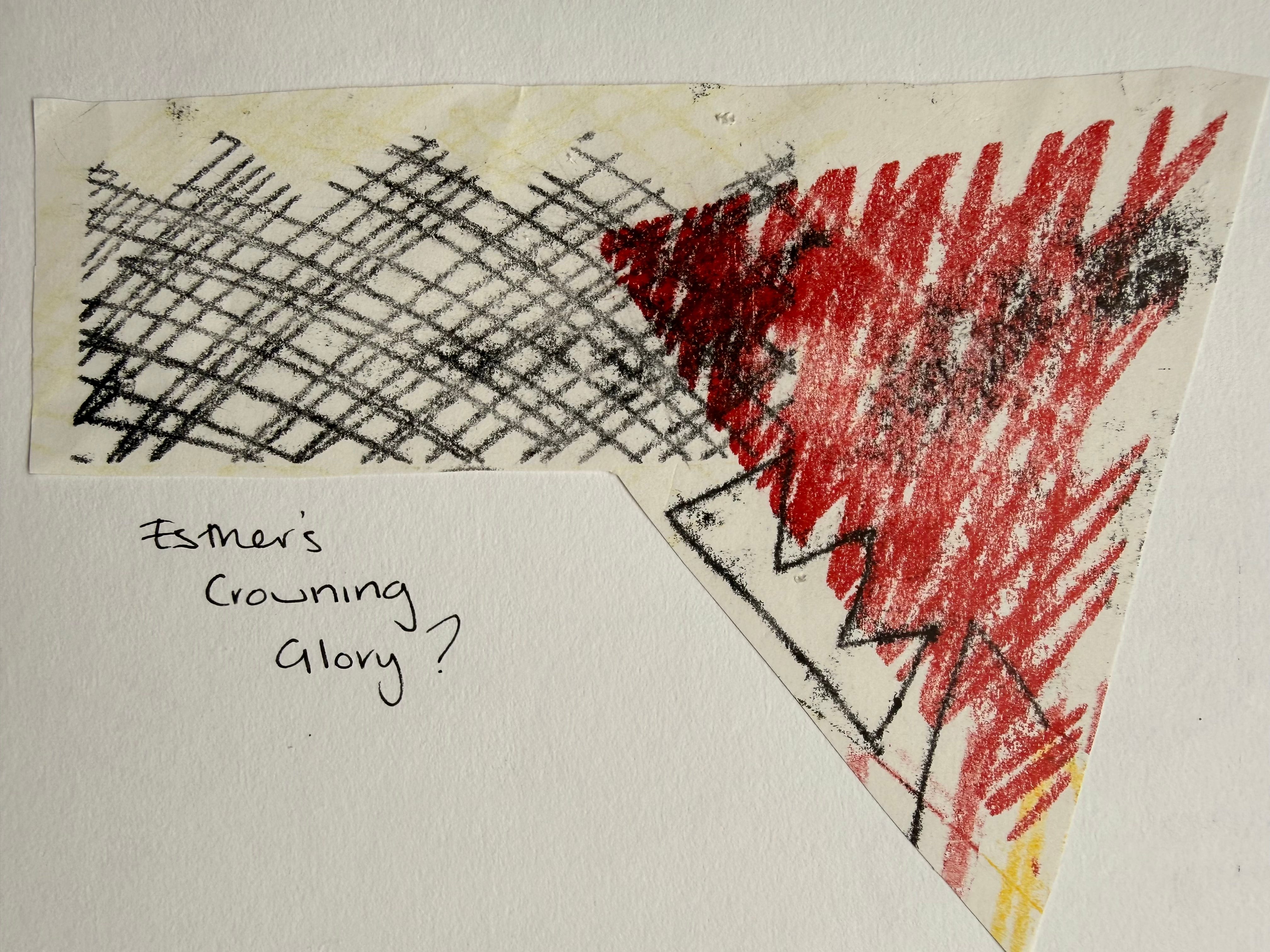
Later someone would ask my favourite question - what if? What if, they said, to change the story we change how we practise our reading of the megillah. What if, after we see Mordechai and Esther, subsumed by the palace we start to boo them, to don our own sackcloth and ashes, and shout OH NO MORDECHAI. OH NO ESTHER. COME BACK, BREAK OUT. What if our role is to remind them, and ourselves, that there is more to our world than institutions that promise success and power at the expense of others.
For religious institutions (at their worst, and their core?) are built upon honour systems, of maintaining the status quo, and hierarchies. When lost to power they measure success based on numbers not meaningful encounters and transformation; focus on gatekeeping over being open to radical hospitality and the transformative power that can come from growth; a preoccupation with bureaucracy over humanity; leadership decisions based on fear rather than courage, risk and experimentation.
Will you join us this Purim in asking, ‘what if’, and by calling Mordechai and Esther, and each other, away from being squares and pawns of the palace and, instead, towards each other and that which is greater than ourselves? Purim Sameach.