

A sermon delivered on Erev Rosh Hashanah 5787 at Finchley Reform Synagogue
Here we are - at the threshold of the eve of the world. Again. A returning. A cycle. Always a returning.
I want to invite you to a returning I make. Every Winter. Without Fail. To St Andrews and one particular bookshop - Toppings. Come in. Join me. In the door. Straight ahead and turn left. Yes, that’s it. Take a seat in this corner. They’ll bring you a drink – coffee or tea. I’ll pass you a book.
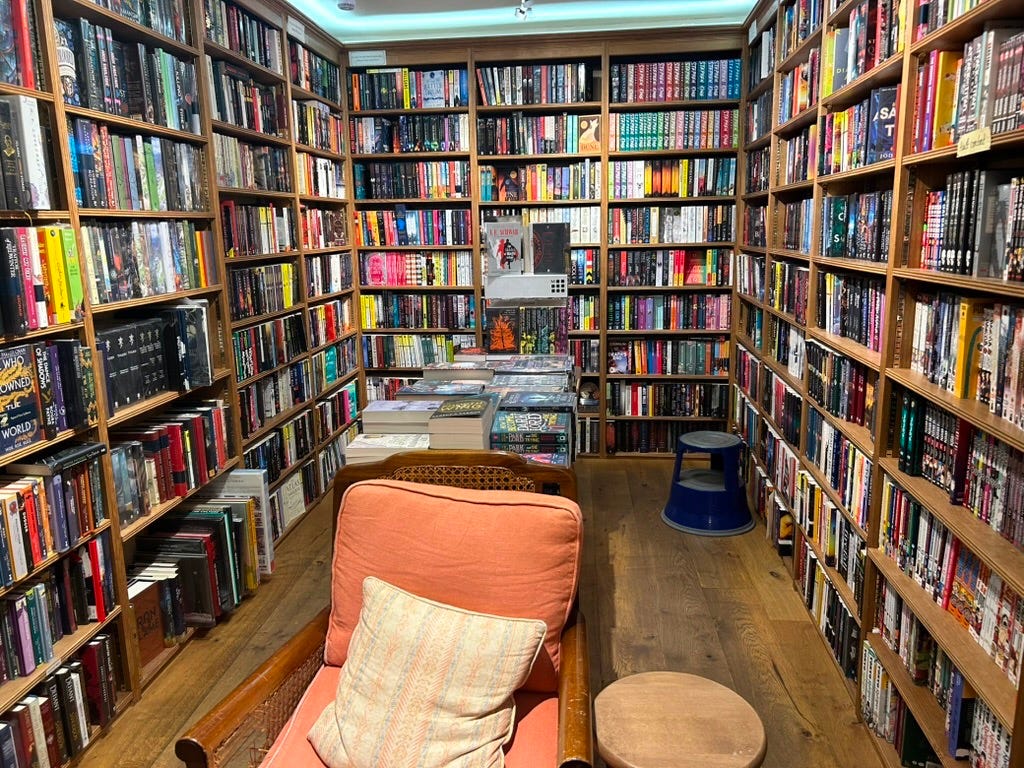
Let’s open it and read:
Athshe, which meant the Forest, and the World….Terran man was clay, red dust. Athshean man was branch and root. They did not carve figures of themselves in stone, only in wood.
(Ursula Le Guin, The Word for World is Forest)
Yes. We’re in the science fiction section. Maybe you’re delighted. Maybe you wouldn’t have sat down here if you’d have known. But now you are, let me bring you into my fantastical science fiction world.
I once read a blog by Lorelei Laird that was entitled – ‘I Couldn’t Join Starfleet [Start Trek], So I Converted to Judaism’. Yes Lorelei, I’m with you, I couldn’t serve alongside Captain Picard so here I am at Finchley Reform Synagogue.
As soon as I open a book which has anything about another world, inviting new languages and new perspectives, I am sold. I love opening a book, as we just did, and feeling out of my depth – Athshe, Athsheans – which world are we on? Who are they? What’s happened? I’m in a spin and I love it. Because I know, as Rabbi Sheila Shulman (zichronah livracha) also knew, that by reading such a book my world is going to be irrevocably changed.
Alright - I hear you – you’re hovering over the page – you want to know more about the book we are reading. It’s by the one and only Ursula le Guin and it’s called The Word for World is Forest.
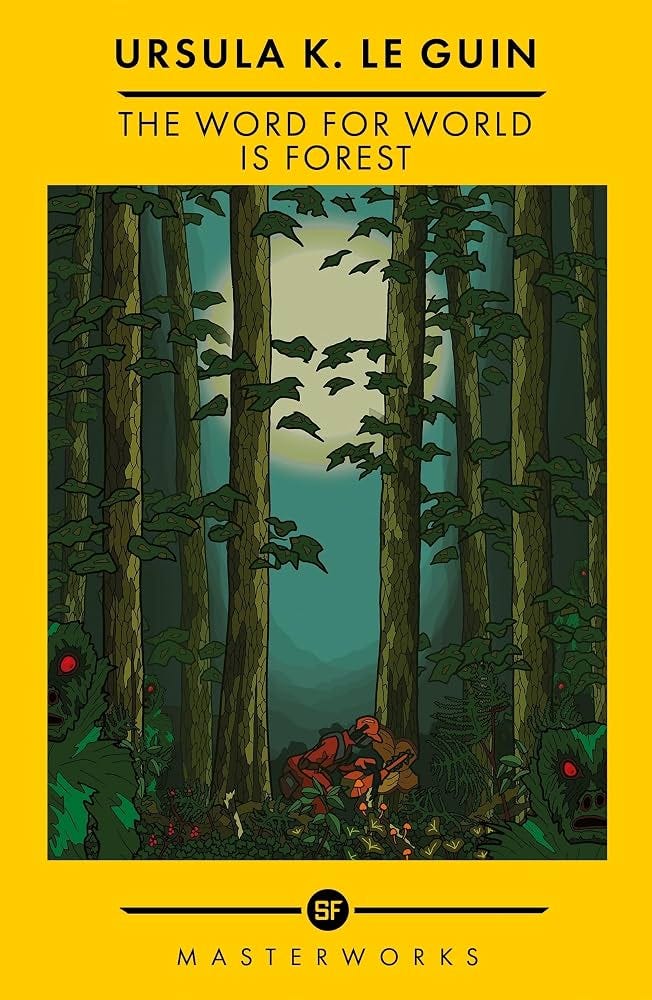
Fine, I planted the book – it’s my favourite. Published in 1972, the novel is set on the green planet Athshe. The Athsheneans, unlike the humans who come and colonise the planet, cannot conceptualise existence apart from the forest – they do not live on the planet; they live with it, as part of it. Their word for world was forest as they understood life as being the forest in all its interconnected, rooted presence. After reading this book, being invited into another world, I could not see our own world in the same way. I realised how apart from nature I lived and how hubristic and exceptional my view of humanity was.
Let me pull another book off the shelf - actually, hang on, it’s more like a scroll. I can’t tell who wrote it or how to read it - there are no vowels. No punctuation. Is - it can’t be - is it written on animal skin? What is this about? The scroll continues to unfurl.
וַיְהִ֗י אַחַר֙ הַדְּבָרִ֣ים הָאֵ֔לֶּה וְהָ֣אֱלֹהִ֔ים נִסָּ֖ה אֶת־אַבְרָהָ֑ם
Sometime afterward, God put Abraham to the test…
A god, a man and his son setting out on an unimaginable quest. A world where gods command and people follow. The threat of violence. A child. A knife. An angel. A story we return to each Rosh Hashanah – the Akedah, the binding of Isaac.
Perhaps this scroll has been misplaced? With gods and angels mentioned the religion section might be more appropriate. Is it blasphemous we find it here in the science fiction section? I don’t think so. Cataloguing the Torah as holy science fiction does not cheapen this scroll’s sanctity – in fact, the Torah invites interpretation and speculative renderings in order to shift our worlds, to wake us from our sleepy inertia towards something we have not been able to articulate nor imagine. Now it is here, in our hands, what speculative renderings can we find?
If I were writing fan fiction and experimenting more with the Torah as holy science fiction my attention would be drawn to one character who is barely noticed in the Akedah….
וַיִּשָּׂ֨א אַבְרָהָ֜ם אֶת־עֵינָ֗יו וַיַּרְא֙ וְהִנֵּה־אַ֔יִל אַחַ֕ר נֶאֱחַ֥ז בַּסְּבַ֖ךְ בְּקַרְנָ֑יו
When Abraham looked up, his eye fell upon a ram, caught in the thicket by its horns.
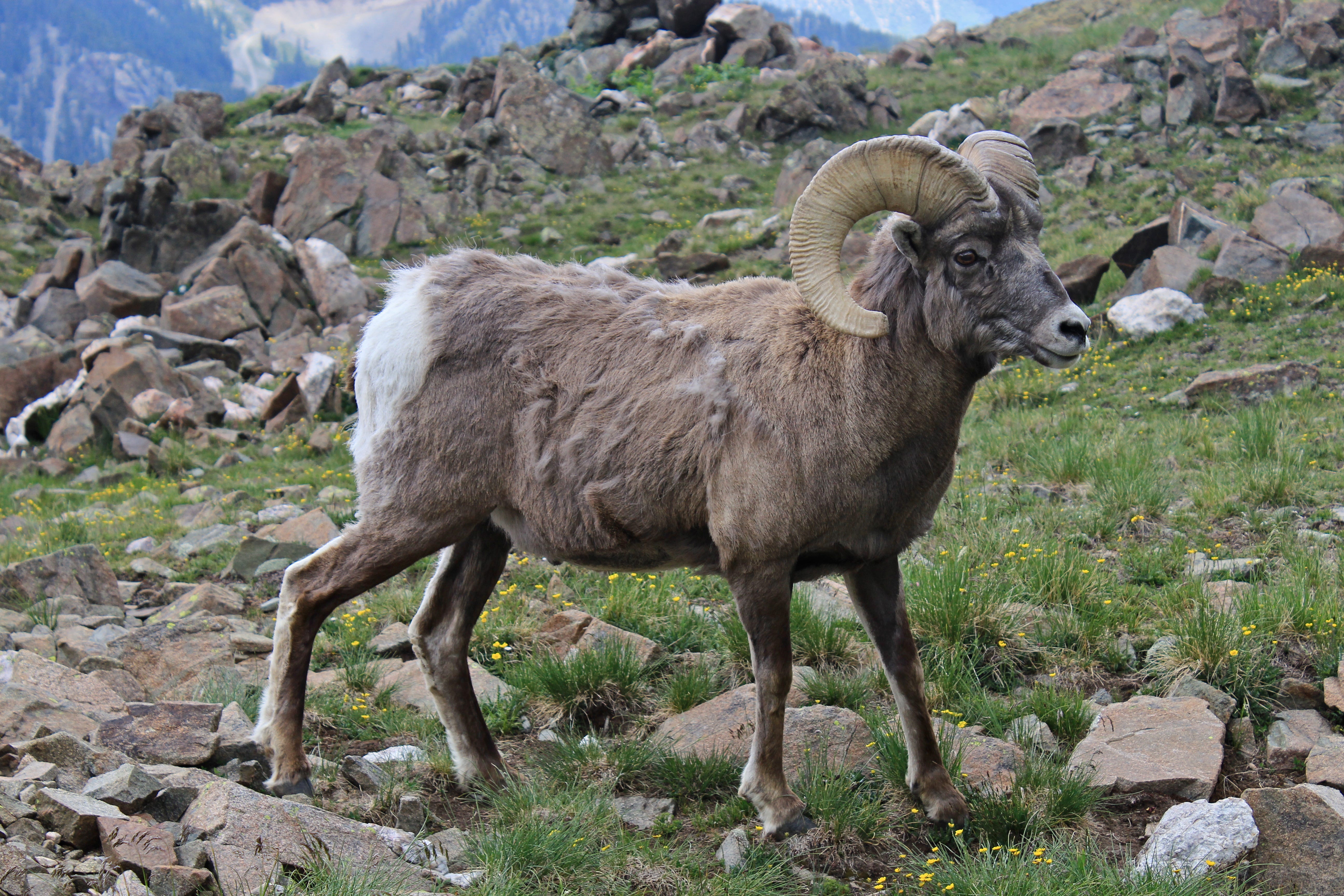
The ram – sacrificed instead of Isaac, Abraham’s son. I wonder - what this story would be as told from the perspective of the ram? A life lived from day to day, surviving, foraging.
A precarious life in some ways but one filled with presence, interconnected with the human animals around him. In this moment the ram is caught, in pain, terrified knowing it is in danger.
It senses the tension from the odd animals nearby – a glint of something shiny, a cry from the young animal. The ram begins to get agitated, it needs to escape. The shiny thing gets closer, the large animal looms with a fiery look in his eyes and then…darkness.

When you think about it, the Torah is full of animals, critters and plants – the trees in the Garden of Eden, Bilaam and a donkey, Abraham and a ram, Deborah and a palm tree, the bushes where Hagar left Ishmael, Noah and the animals, Jonah and a gourd, and the cattle. A famous saying goes that if a donkey were to read the Torah they would think the story was by, for, and about donkeys. We as humans read the Torah and assume it is by, for, and about us. How wrong we are.
What science fiction, and the Torah, and the worlds around us, try incessantly to teach us is that we humans are not the centre of this world. The word for world is forest. The American philosopher Donna Haraway calls our attention to the symbiotic, entangled reality of our world in her book, Staying with the Trouble. That is, we are part of multispecies reality, living through and interlinked intimately, impossibly, and completely to every other living thing on this planet.
A ram and a boy.
A forest aflame and busy, inattentive humans at work.
All connected, woven, entangled in symbiotic relations.
I’ll end with one final book. We’ll have to reach over to the next section for this isn’t science fiction but a book called The Island Within by Richard Nelson about his time on a remote Alaskan island.
Here he talks of salmon and what they can teach us about returning, dying and living, and the inter-connectedness of all our worlds:
A new generation of fish will ripen from the bodies of the old, flow out into the sea, grow there by feeding on other life and then return. Like all else that lives, the salmon are only bits of earth, shaped for a moment into fish, then taken back again to emerge as other life. This same transformation has repeated itself in Bear Creek each fall for thousands of years, and on the island since the first organisms scuttled in the depths of the Paleozoic era….The salmon are not independent organisms but tiny parts of one great organism that contains them all, the living flesh that grows from earth and covers its surfaces…How can there be a final, absolute death if life as a whole, or earth itself, is the organism? What I’ve dreaded about death is the prospect of leaving, of lapsing into a nothingness beyond life. But in this endless process of metamorphosis, there can be no final death, only a transmutation of life. A flowing through. A constantly changing participation in the living community. And the fate of all living things is an earthbound immortality.
‘A flowing through’. What would happen if our language changed from world to forest? What if we began to tell the story of the ram and boy, recognising how their lives were connected? What if we really knew and felt the earth itself as the organism?
What imaginative new futures could we create if we allowed ourselves to wildly wonder as the Torah and all speculative fiction demands? What would we learn about death, dying, life and living? Would we pay attention to all the comings and goings, of ants, bees, rams, rivers, salmon?
If we understood we were just a part of a huge, entangled ecosystem how much smaller might our human busyness seem? What returning may we be capable of? What might this eve, of this new year, herald? As the book of life is open, what transformation and metamorphosis may we discover?
Ken Yehi Ratzon - May it be God’s will. Or, as one Captain Picard is fond of saying - Make it so. Amen.